

The green energy market is increasingly drawing attention as sustainability motivations soar in line with regulation and environmental awareness. Having recently attended JEC World 2026 in Paris, IDTechEx spoke with multiple companies and players within the composite market showcasing their latest innovations. IDTechEx's portfolio of Energy & Decarbonization Research Reports and Subscriptions covers some of the main renewable energy markets, including wind, solar, and hydrogen.
Hydrogen storage tanks with biobased resins
Arkema were a big name at JEC World 2026, creating biobased polymers including their 100% biobased PA11, made from castor plant, which can prevent the use of crude oil and lower carbon footprints. Castor for bioplastics also does not compete with food production as it is not a food crop, meaning it can be grown in lower quality soil and does not result in deforestation. Such materials can provide solutions to the more sustainable manufacturing of hydrogen storage tanks, shown to be effective by the company Air Liquide.
Air Liquide presented their hydrogen tanks at JEC, made with Arkema's materials, which have proven to meet content and safety targets. The tanks have unparallelled resistance to blistering as a result of the PA11, proving the material's main selling point, while also having weight saving structures and being compliant with green hydrogen storage as a result of their high quality and performance. IDTechEx's portfolio of Hydrogen Research Reports and Subscriptions covers the large, ever-expanding hydrogen market, with the latest storage and fuel cell technologies and applications ranging from stationary energy storage to sustainable aviation.

Arkema at JEC World 2026. Source: IDTechEx.
Sustainable aviation and Climate Impulse
Lowering aviation emissions is one of the biggest engineering challenges, according to Syensqo. The company presented on the 2024-founded project, Climate Impulse, of which they are a main technology partner, which aims to fly a hydrogen-powered experimental plane at 180kmph around the world between 2028 and 2029. With CO2 emissions having doubled over the last 30 years, the time for such a project has never been more pressing.
One of the main considerations for the aircraft is the need for it to be lightweight, with a planned total weight of 6 tonnes, with strong composites reportedly replacing the conventional metallic structure to greatly decrease weight and increase energy efficiency. Syensqo stated that around 20 to 90 layers of composites, including carbon fiber and thermoset epoxy resin, will be required to achieve the desired outcome of strength to weight ratio. The liquid hydrogen storage within the aircraft is also expected to be made from 100% composite, which also comes with challenges including withstanding temperatures cycles as low as -253 °C and having a dormancy period of 9 days. IDTechEx's report, "Sustainable Future Aviation 2025-2045: Trends, Technologies, Forecasts", covers some of the storage options for hydrogen planes.
Syensqo further reported that an entire ecosystem of companies is being built around this project, with many different players coming together to achieve a shared goal. Should this experiment be successful, Climate Impulse's aim is to have an Airbus ZEROe by 2040.

Syensqo at JEC World 2026. Source: IDTechEx.
Sustainable solar panels and recycled resins for wind turbines
UDMAX exhibited their 100% circular, PFAS-free solar panel backing materials, having won the JEC World Innovation Award in 2023, which can also lead to up to a 50% weight reduction. The increased use of sustainable materials will not only result in a decreased carbon footprint within the photovoltaic sector, but within the renewable energy sector as a whole, with each material having a role to play in decarbonization and the movement away from non-renewable sources.

UDMAX at JEC World 2026. Source: IDTechEx.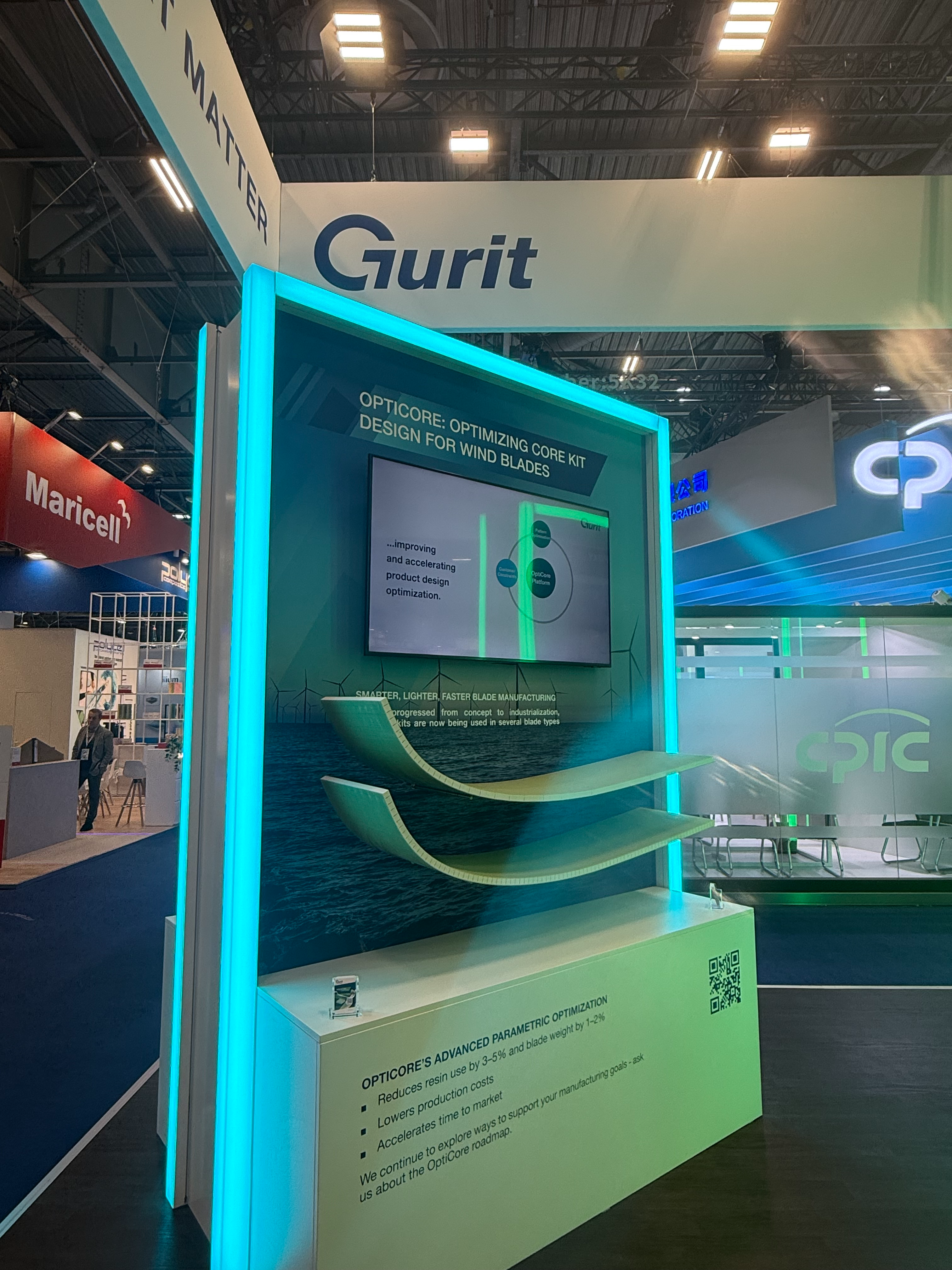 Gurit at JEC World 2026. Source: IDTechEx.
 Gurit at JEC World 2026. Source: IDTechEx.
Helios resins, turning over 160 million euros, are used for wind turbine generator housings, and have received awards for their recognized sustainability efforts. The company uses recycled PET for their resins, and has strong relationships with various research institutions, highlighting a current and future aim to be environmentally conscious. Helios is striving for lower emission processes, safer curing systems, and bio-based material choices wherever possible. The company also claims to be working on chemical recycling, catalytic depolymerization, and securing routes for waste plastic.
Similarly, Gurit is another company switching to sustainable material choices for wind turbine manufacturing, having reported a 24% reduction of scope 1 emissions in 2025, and showing efforts across multiple companies operating in the sector. IDTechEx's report, "Composite Materials for Green Energy Markets 2026-2046: Sustainable Technologies, Players & Trends", covers some of the latest applications for new and sustainable composite materials making a name for themselves within the renewable energy sector.
For more information, visit IDTechEx's portfolios of Hydrogen Research Reports and Subscriptions and Energy & Decarbonization Research Reports and Subscriptions for the latest market research into materials for renewable energy.
