

Industrial biomanufacturing is outgrowing its dependence on corn- and sugarcane-derived feedstocks, with lignocellulosic biomass and C1 gases like methane and CO2 emerging as scalable, lower-cost alternatives. This shift is set to reduce land-use competition, improve sustainability, and unlock new cost reduction opportunities across the sector.
Every year, the US alone vents, leaks, or otherwise wastes more than 6 billion cubic meters of methane from landfills, wastewater treatment, and agricultural decomposition. That volume of gas, currently treated as waste, is increasingly viewed by biomanufacturing players as a feedstock. Industrial biomanufacturing is now moving beyond its historical reliance on sugar-based feedstocks and toward a more diverse, more resilient, and potentially cheaper set of raw material inputs.
For most of the industrial biomanufacturing sector's history, growth has been built on the foundation of glucose and sucrose derived from easy-to-access crops like corn and sugarcane. These feedstocks are abundant and well understood, but they are also increasingly contested by food security demands, shrinking arable land, and rising costs. The new IDTechEx report, "Industrial Biomanufacturing 2027-2037: Technologies, Forecasts, Markets, Players", examines the technology trends reshaping this space, and one of the most consequential is the rise of next generation feedstocks. This article explores why the industry is diversifying its raw material base, which alternatives are gaining traction, and what this means for the competitive landscape.
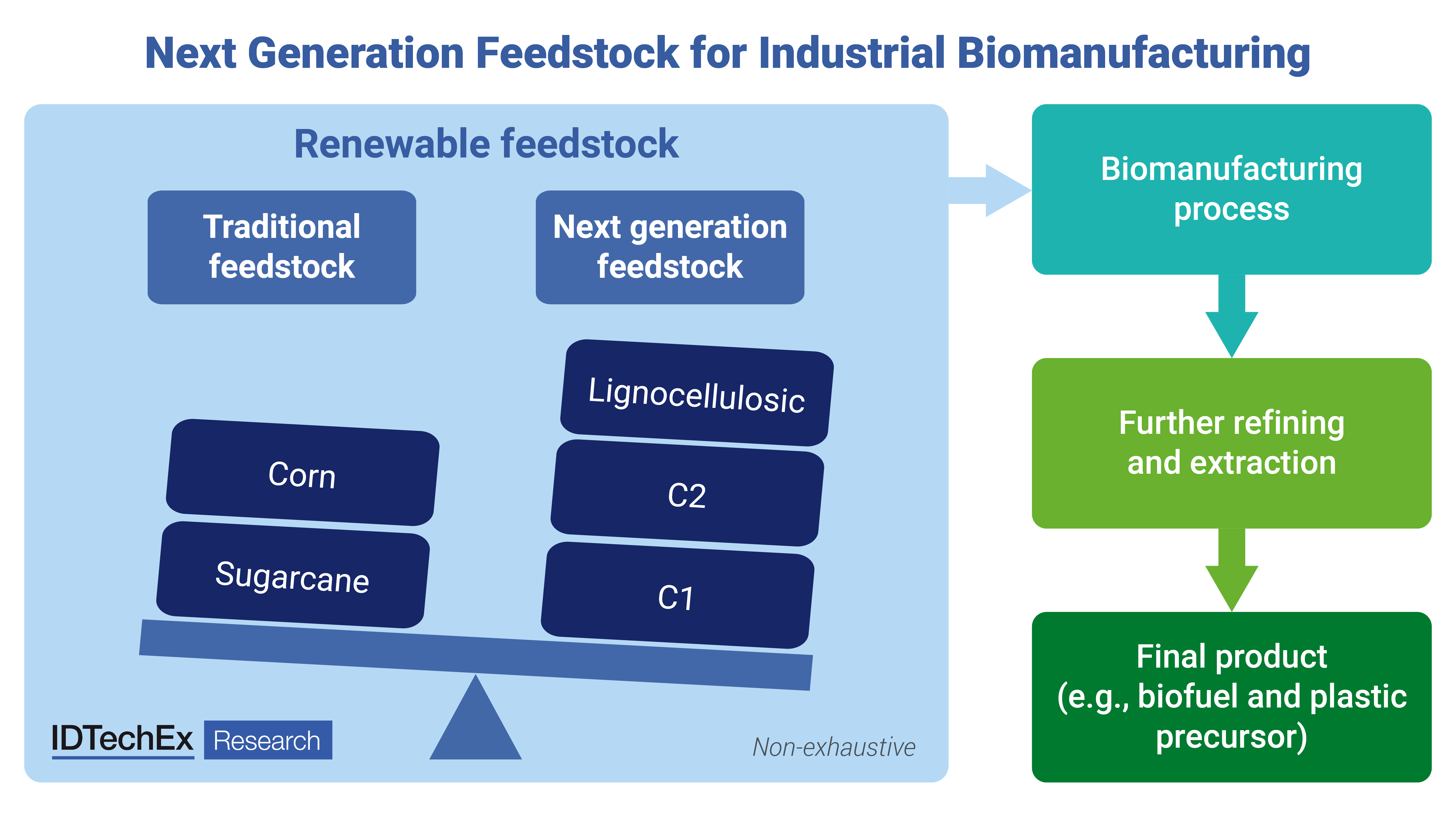
Next generation feedstock for industrial biomanufacturing. Source: IDTechEx.
The case for moving beyond sugar
The push toward alternative feedstocks is driven by multiple forces rather than a single cause. Land competition is the most immediate: as climate change reduces the amount of arable land available for agriculture, and as food security concerns intensify, communities are increasingly inclined to prioritize food crops over industrial feedstock production. This puts sugar-dependent biomanufacturing players in direct competition with the food system, a position few companies want to defend long-term.
Sustainability adds a second layer of urgency. Feedstock derived from waste streams, such as waste gas from steel mill operations, can shrink biomanufacturing's carbon footprint substantially, effectively turning fermentation into a carbon capture tool rather than just a production process.
Cost is the third driver. Waste-derived feedstocks are often cheaper than cultivated sugar crops. In addition, shorter biosynthetic pathways, which are possible with certain alternative feedstocks, reduce the carbon loss that occurs when engineered microbes convert sugars through long, multi-branch metabolic routes.
Next generation feedstocks
Two feedstock categories are emerging as the leading contenders. Lignocellulosic biomass, including cellulose, hemicellulose, and lignin from sources like sugarcane bagasse, corn stover, switchgrass, and kraft pulp, are the most abundant polymer complex on Earth. It remains, for now, the "underdog" in adoption terms, largely because its complex structure resists deconstruction into fermentable sugars. Methods like hydrolysis, gasification, and pyrolysis can unlock it, but these steps can be costly and time-consuming enough to erode the economic case. However, as microbial and enzymatic deconstruction technology matures and becomes cheaper, lignocellulose is positioned to move from underdog to disruptor.
C1 feedstocks, including methane, CO2, methanol, and formaldehyde, represent the second frontier, and arguably the more advanced one commercially. Methanotrophic bacteria can already convert methane into value-added chemicals, and fermentation of syngas by acetogenic bacteria has been commercialized for producing ethanol, lactic acid, and PHAs. Advances in gene editing and metabolic engineering have been instrumental in making these gas fermentation pathways viable, and the resulting biocatalysts show notable tolerance to gas impurities, giving manufacturers flexibility in feedstock composition. Notably, gas fermentation also creates a bridge back to lignocellulosic biomass: recalcitrant biomass can be converted into relatively homogeneous gas streams via anaerobic digestion, gasification, or combustion, then fed into the same industrial gas fermentation infrastructure used for methane and syngas.
Outlook: A larger slice of the materials and chemicals pie
As these feedstock technologies mature, industrial biomanufacturing is positioned to capture a growing share of the broader materials and chemicals market, displacing conventional petrochemical routes in segments where bio-based production can now compete on both cost and sustainability. The share of non-sugar feedstocks, particularly lignocellulosic biomass and C1 gases, will steadily increase relative to traditional sugar inputs, as deconstruction costs fall and gas fermentation infrastructure scales. Companies that build early capabilities in alternative feedstock types will be best positioned to weather land-use pressures, feedstock price volatility, and tightening carbon regulations.
For more details on industrial biomanufacturing market drivers, technology trends, company landscape, and market forecast, see the IDTechEx market report: "Industrial Biomanufacturing 2027-2037: Technologies, Forecasts, Markets, Players".
For more information on this report, including downloadable sample pages, please see www.IDTechEx.com/IndustrialBiotech. For more information on IDTechEx's other reports and market intelligence offerings, including bioplastics and biofuels, please visit www.IDTechEx.com/Research.
IDTechEx guides your strategic business decisions through its Research, Subscription and Consultancy products, helping you profit from emerging technologies. For more information, contact research@IDTechEx.com or visit www.IDTechEx.com.
