

Natural chemicals, machine learning that can advance enzyme engineering, and bioplastic food containers are just some of the benefits of sustainable chemical technology. Self-healing materials for cars and alternative leathers could also see new sustainable developments within the automotive sector. IDTechEx's expansive research on sustainable technologies can be found in the Sustainability Research Reports portfolio.
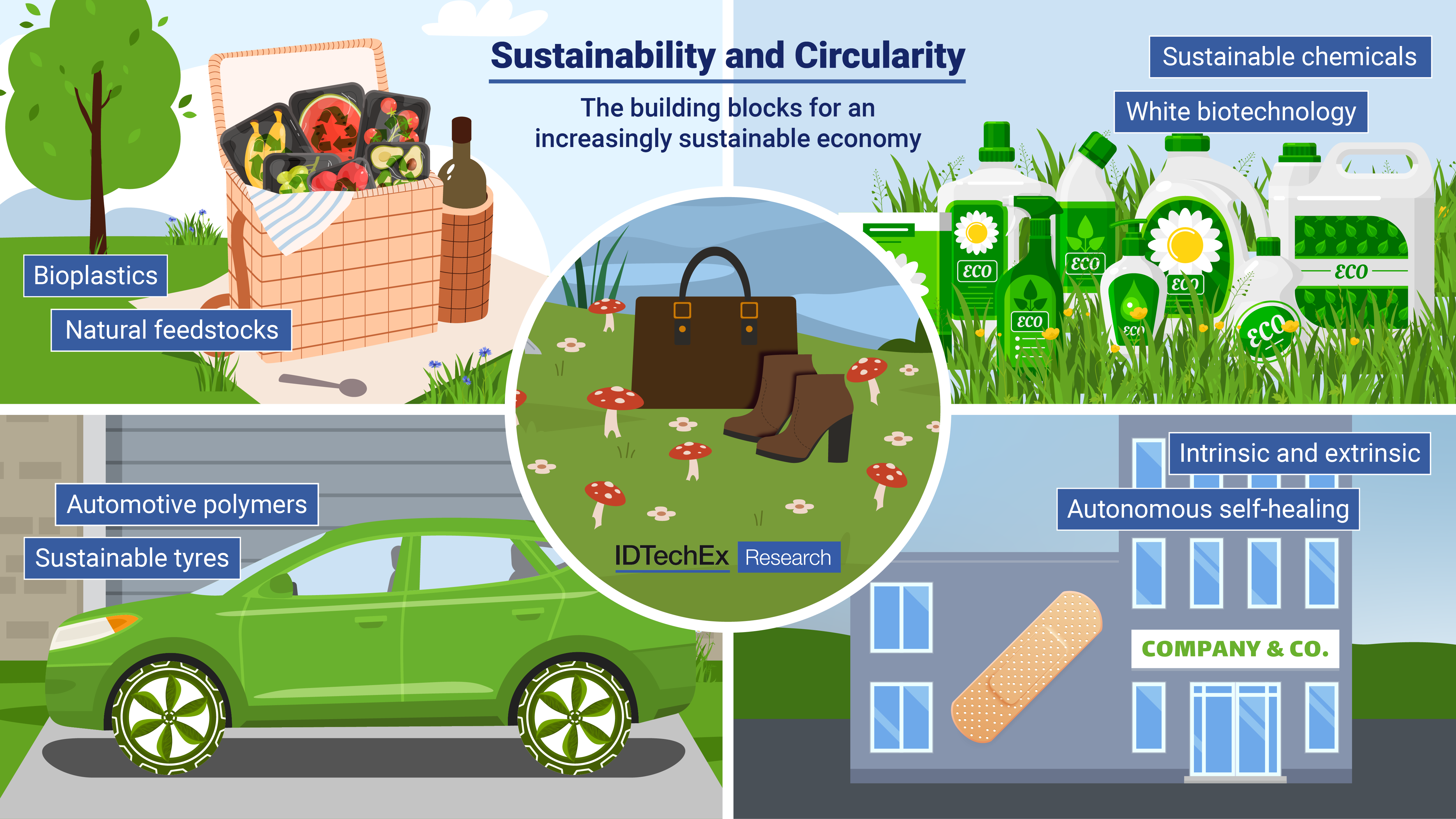
Sustainability and Circularity. Source: IDTechEx.
Clean chemicals and natural feedstocks
Naturally derived chemicals could reimagine cleaning products, so spring cleaning doesn't have to be a swarm of toxic chemicals in the air. The production processes of sustainable chemicals will also not create the same environmental issues of embedded carbon emissions as with conventional chemicals. Next-generation feedstocks will hopefully combat this issue.
Sugar cane, hardwood, softwood, rice straw, and sawdust, are some examples of lignocellulosic feedstocks, which are the most readily available bioresources globally and are low cost. This type of next-generation feedstock is derived from the walls of plant cells that contain natural polymers such as cellulose, hemicellulose, and lignin - it is these polymers that can be used to create biochemical products.
Next-generation feedstocks therefore provide a means of utilizing waste products that are available all year round and bring sustainability to longstanding chemical manufacturing processes. IDTechEx's report, "Next-Generation Feedstocks for Sustainable Chemicals 2025-2035: Markets, Players, Forecasts", explores the materials and developing processes for creating new chemical types.
White biotechnology and machine learning
Everyday household items such as plastics and textiles, alongside fuels and speciality chemicals, could be on their way to becoming increasingly bio-based with white biotechnology, so consumers can opt for more sustainable choices.
White biotechnology is the processes of using biological systems to create industrial, value-added products, and is becoming a means of reducing fossil fuel reliance and lowering the carbon footprint of many materials. Lignocellulosic materials, sugars, and gases are all natural, common input feedstocks used in white biotechnology processes, which undergo fermentation to be converted into target molecules.
AI-driven optimization, cell-free synthesis, immobilized enzymes and catalysts, and hybrid biological-chemical systems are some of the biomanufacturing process improvements that can be made within synthetic biology, to benefit and optimize biological systems of the future. Machine learning in particular could become a popular tool in advancing enzyme and protein engineering, such as creating molecules that are stable at higher temperatures and extreme pH levels. IDTechEx's report, "White Biotechnology 2025-2035: Technologies, Forecasts, Markets, Players" has more details on the up-and-coming developments within the sector.
Biodegradable picnic packaging
Going on picnics without the worry of harmful plastics being blown away in the wind could be a future benefit of the implementation of bioplastics. While many bioplastics today still require appropriate discarding processes, it could be imagined that biodegradable plastics could one day become mainstream.
Circularity is a huge focus of IDTechEx's report, "Bioplastics 2025-2035: Technology, Market, Players, and Forecasts". The possibility of bioplastics being broken down by microorganisms in the soil, which could then be used as a feedstock for new plastics, is the epitome of circularity and sustainability within the plastic sector.

Source: IDTechEx.
Buildings and automotives with sustainable self-healing
Natural wear and tear to houses and office blocks won't have to be a cause for hefty costs or builder repair jobs. Where previously buildings with cracks may have indicated old age or deterioration, self-healing materials could allow for self-repair and the ability to look good as new. When water or moisture enters cracks, bacteria spores that were lying dormant are prompted to produce calcium carbonate, which can take on the role of a natural sealant. The spores can then be reproduced as part of the processes, meaning that the seeds are naturally replanted and ready for the next cycle. This new, sustainable quality to buildings could mean they benefit from longer lifetimes, reduced maintenance, and improved safety, so the future could see more durable and reliable infrastructure.

Source: IDTechEx.
Driving down thorny, narrow country lanes to a seaside holiday cottage won't have to create car concerns, as automotive exteriors could also benefit from self-healing technologies. Scratches or minor dents could be repaired automatically, without the need for a trip to the garage or money spent on new paint. IDTechEx's report, "Self-Healing Materials 2025-2035: Technologies, Applications, and Players", covers the many different types of self-healing materials and their processes, along with market developments and applications predicted to be seen over the next decade.
Emerging materials for cars and clothes
Driving cars made from sustainably sourced materials could be another switch towards a healthier planet, especially if those cars are electric and don't produce harmful emissions while on the road. Interior trims, seat cushions, and floor mats are the most common features to be made sustainable, featuring sustainable plastics or alternative leathers.
Circularity within automotives today looks a lot like post-use plastic being converted into feedstock for new polymers, avoiding the need for virgin plastic production. However, bioplastics entering this cycle would mean that emissions can be reduced and more sustainable recycling processes can be adopted. The development of material recovery and recycling pathways will pave the way for a future that is more sustainable, with companies making eco-friendlier choices. IDTechEx's report, "Sustainable Plastics for Automotive 2025-2035: Market, Players, and Forecasts", covers new types of plastics being adopted within the automotive industry specifically, with forecasts for their uptake in the future.
Leather alternatives could benefit not just car interiors, but everyday consumer goods, from handbags to trainers. Plant-based and mycelium leathers could provide a means to lessen the need for land usage, deforestation, and habitat destruction associated with conventional leather sourcing and manufacturing.

Source: IDTechEx.
Pineapples leaves, apple skins, grapes, and bamboo, can all act as input feedstocks for plant-based leathers, which are the most popular sustainable alternatives leading the way. Existing infrastructure for the production of leather can also be utilized, meaning the change in direction towards leather alternatives doesn't have to come with excess costs. IDTechEx's report, "Emerging Alternative Leathers 2024-2034: Technologies, Trends, Players", covers the extensive list of processes and growing applications.
For more information on the future of sustainability developments and emerging technologies within the sector, visit IDTechEx's portfolio of Sustainability Research Reports.
